
Mivan pins and wedges usually stick because slurry has set around them, the steel has rusted, or a pin is bent or its holes are out of line. Free them with penetrating oil and light taps from a rubber mallet and drift, never heavy blows on the frame. Clean and grease them every cycle.
A jammed pin costs more than the minute it takes to knock out. Crews reach for bigger hammers, panel frames get dented, holes get enlarged, and the next pour leaks grout at that joint. This guide covers why pins and wedges seize, how to free them without damaging panels, and the greasing routine that stops it happening. The grease we make for this job is our Mivan shuttering grease.
Why Mivan pins and wedges get stuck
Almost every stuck pin comes down to one of five causes. Find the cause before you pick up a tool, because the fix is different for each.
| Cause | What you see | Fix on the day |
|---|---|---|
| Slurry set in the hole or on the pin | Grey crust round the pin head; pin rocks but will not slide | Soak, tap out, scrape the hole clean |
| Rust on the steel pin or wedge | Orange, rough shank; wedge face pitted | Penetrating oil, tap out, wire-brush; replace if badly pitted |
| Bent or mushroomed pin | Pin will not pass straight; head flattened from hammering | Drive out with a drift and scrap the pin |
| Holes out of line | Pin binds on one side; panels visibly stepped | Take the load off and realign the panels before removing |
| Dry hardware | Everything is stiff, even on clean pins | Free it, then clean and grease before the next fix |
Greasing over slurry, or using diesel or shuttering oil instead of grease, makes all five worse.
How to free a stuck pin or wedge without damaging panels
Follow the stripping sequence your formwork supplier and site engineer have set. Never remove pins from a panel that is still carrying load or holding up another panel.
- Find the cause first. Look at the joint. Slurry, rust, a bent pin and misaligned holes each need a different fix, and none of them is solved by a heavier hammer.
- Take the load off the joint. If the panels are pressed together or stepped, release the neighbouring pins, ties or props in the planned order so the stuck pin is no longer pinched.
- Soak it. Apply penetrating oil around the pin head and the wedge slot. Give it several minutes to creep into the slurry and rust before you try again.
- Tap, do not strike. Use a rubber or nylon mallet. For a pin, put a soft drift on the tail and tap it through. Formwork makers warn against blows on aluminium frame profiles, so keep steel hammers off the frame.
- Work wedges back the way they went in. Tap the narrow end so the wedge backs out of the slot, with a slight side-to-side movement to break the slurry bond.
- Scrape the hole once the pin is out. Use a flat scraper to clear slurry from both panel holes while it is still soft. A dirty hole jams the next clean pin.
- Set damaged parts aside. Bent pins, cracked wedges and dented or oval holes go to a separate bin and are reported to the formwork supplier. Do not put them back into the floor set.
- Clean, grease and store. Freed hardware goes through the normal cleaning and greasing routine below before it is used again.
Cutting or grinding out a stuck pin, or opening up the hole with a grinder to make the next pin fit. An enlarged hole lets the panels move, the joint leaks grout and every following pour shows the step on the wall.
The greasing routine that prevents it
Stuck hardware is a maintenance problem, not a bad-luck problem. Sites that run the same short routine at every strip rarely fight their pins.
- Clean straight after stripping. Scrape slurry off pins, wedges and threads while it is still soft. Hardened slurry takes far longer and damages parts.
- Wash and let dry. Grease will not hold on wet or dusty steel.
- Inspect every piece. Bent, pitted or cracked parts come out of service now, not at the next strip.
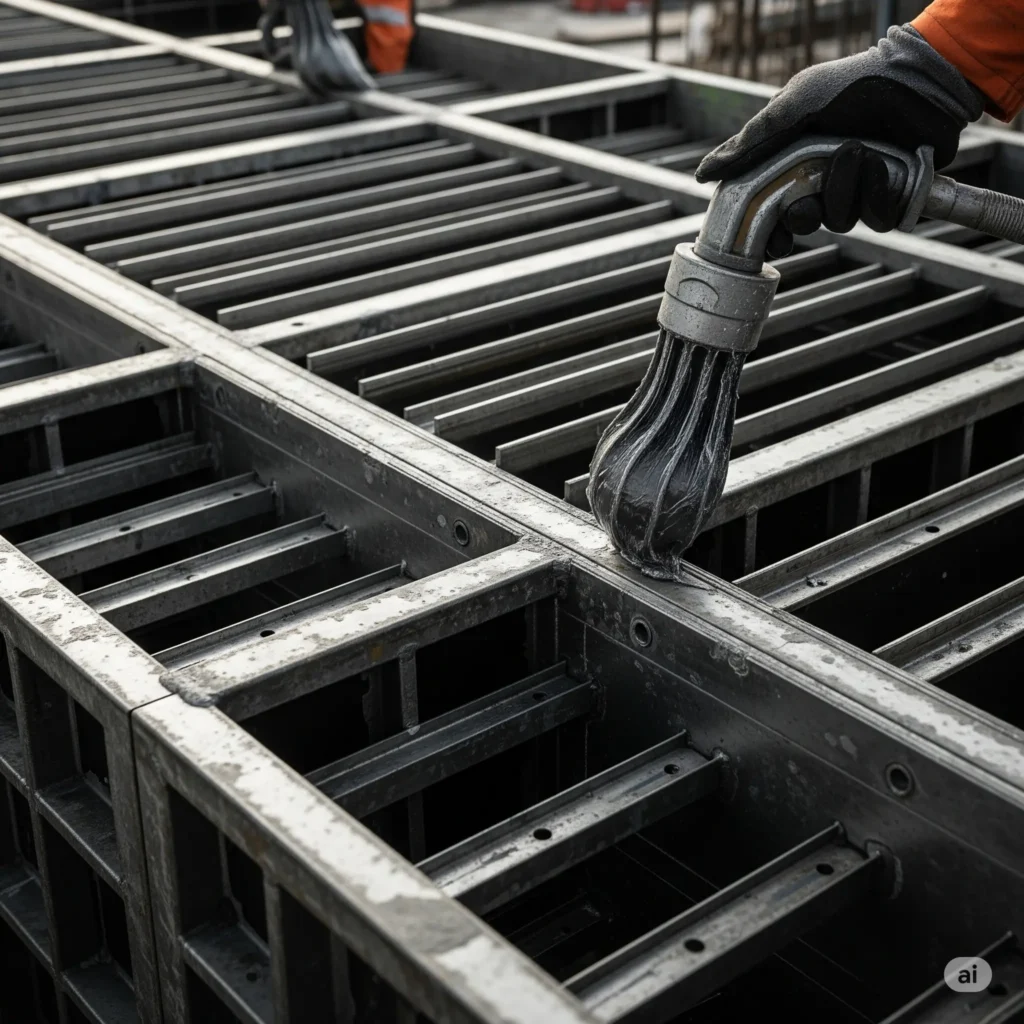
- Brush on one thin film. Coat the full length of each pin and both faces of each wedge. A thick lump collects grit and gets wiped onto the panels.
- Store covered. Keep greased pins and wedges in lidded bins between floors so dust and rain stay off them.
Check your formwork manual: some systems ask for certain locks to be kept dry. The full component-by-component schedule is in how to grease Mivan formwork, and the way to size your grease order is in Mivan grease consumption.
Monsoon and long gaps
Two situations cause most seized hardware on Mumbai and Thane sites:
- Monsoon (June to September): rain and curing water strip grease off exposed pins quickly. Clean and re-grease every cycle without exception, and keep spare pins under cover.
- Gaps between floors or between projects: hardware left in the open for a week rusts. Clean, grease and bag pins and wedges before any pause.
Which grease to use on Mivan pins and wedges
Use a grease, not a release oil. Shuttering oil belongs on the panel face; on pins it runs off and gives no protection, which is why the two are covered separately in Mivan grease vs Mivan shuttering oil.
Grease for formwork hardware is not one fixed product. KE makes its Mivan grease to the project and requirement: some sites need a thicker grease, some a more slippery one, depending on the hardware and how the crew applies it. Some sites also use batata (yellow) grease on shuttering hardware; KE makes that too, as a different grade chosen per requirement. Tell us your hardware and ask for a sample to try on a few pins before you order.
Frequently asked questions
Why do Mivan pins get stuck?
Usually because cement slurry has set around the pin or in the hole, the steel has rusted, the pin is bent, or the panel holes are out of line. Dry or ungreased hardware makes every one of these worse.
How do I remove a jammed Mivan wedge?
Soak the slot with penetrating oil, wait a few minutes, then tap the narrow end with a rubber or nylon mallet so the wedge backs out the way it went in. Do not strike the aluminium frame.
Can I hammer Mivan panels to free a stuck pin?
No. Blows on the aluminium frame dent the profiles and enlarge the holes, which causes grout leaks and misalignment on later pours. Tap the pin with a soft drift instead.
How often should Mivan pins and wedges be greased?
Every assembly cycle, after cleaning and drying, unless your formwork supplier’s manual says a part must be kept dry.
Can I use diesel instead of grease on Mivan pins?
It is not recommended. Diesel is thin, runs off within hours and attracts dust that wears pins and holes, so the pins jam again at the next strip.
What should I do with bent Mivan pins?
Take them out of the floor set and replace them. A bent pin jams no matter how much grease it gets, and forcing it damages the panel holes.
Related: Mivan Shuttering Grease · How to Grease Mivan Formwork · Mivan Grease vs Mivan Oil